Southwest Traverse: Journey Highlights

Updated: Dec 27, 2025
Southwest Traverse: Closing Out 2025 With a Grand Overland Expedition. I'm currently on a flight to Singapore and Thailand for a few weeks and wanted to take the time to share some highlights from our latest trip. Read on below!
With the year coming to a close, I set out to create a grand Southwest expedition to end 2025’s overland adventures on a strong note.
We had just returned from an extended 10‑day trip throughout southwest Arizona and New Mexico—but the adventure almost didn’t happen (sort of.) Just days before departure, I noticed my driver‑side shock had developed a leak. Knowing I wouldn’t feel comfortable tackling a trip of this scale with compromised suspension, I scrambled to find a shop that could rebuild it in time. By some miracle, Arizona Toy Pros in Mesa squeezed me in and rebuilt the shock the day before we left. It felt like the universe wanted this trip to happen.
Santa Rita Mountains & Empire Ranch:
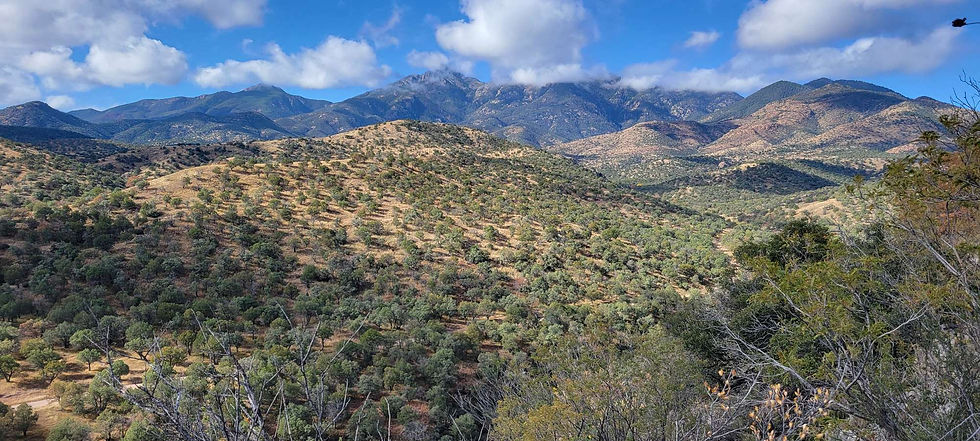
Our journey officially began mid‑day in Green Valley, AZ, heading east into the Santa Rita Mountains. What started as a casual warm‑up quickly turned unexpectedly challenging, but within a few hours we found our first campsite. Cold air and intermittent rain rolled in, eventually settling into a steady overnight downpour. By morning, though, the skies cleared, revealing the crisp, beautiful weather that would carry us through the next several days.
The following day brought us into the Las Cienegas National Conservation Area for a self‑guided tour of the historic Empire Ranch. The 22‑room adobe and wood‑frame ranch house, dating back to 1870, sits at the heart of the 42,000‑acre conservation area and has operated as a working cattle ranch for 140 years. After exploring the grounds, we found an early campsite beneath a massive oak tree, where I cooked a group dinner and we enjoyed some well‑earned downtime.
Sonoita Vineyards, Canelo Pass & Borderlands History:
Day three took us farther south to Sonoita Vineyards—the oldest commercial vineyard in Arizona—for a wine tasting and charcuterie lunch. From there we continued into Coronado National Forest, crossing Canelo Pass (5,455 ft) and traveling to within a quarter mile of the Mexican border. The San Rafael Valley unfolded in sweeping beauty as we passed through Lochiel and several ghost towns, including the Lochiel Schoolhouse and the Fray Marcos de Niza Historical Landmark—the approximate site where the Franciscan friar became the first European to enter present‑day Arizona in 1539.
We continued northwest through the Patagonia Mountains and the town of Patagonia before turning south toward Nogales. Slightly ahead of schedule, we decided to address a slow leak in Bo’s Tacoma tire—a leak we’d been monitoring since the previous night. After grabbing lunch from a fantastic Mexican food truck, a local shop discovered a large nail embedded in the inner sidewall. The damage was unrepairable, but another shop next door had a replacement tire. Crisis averted, we rolled on with peace of mind.
Parajita Wilderness & Buenos Aires National Wildlife Refuge:
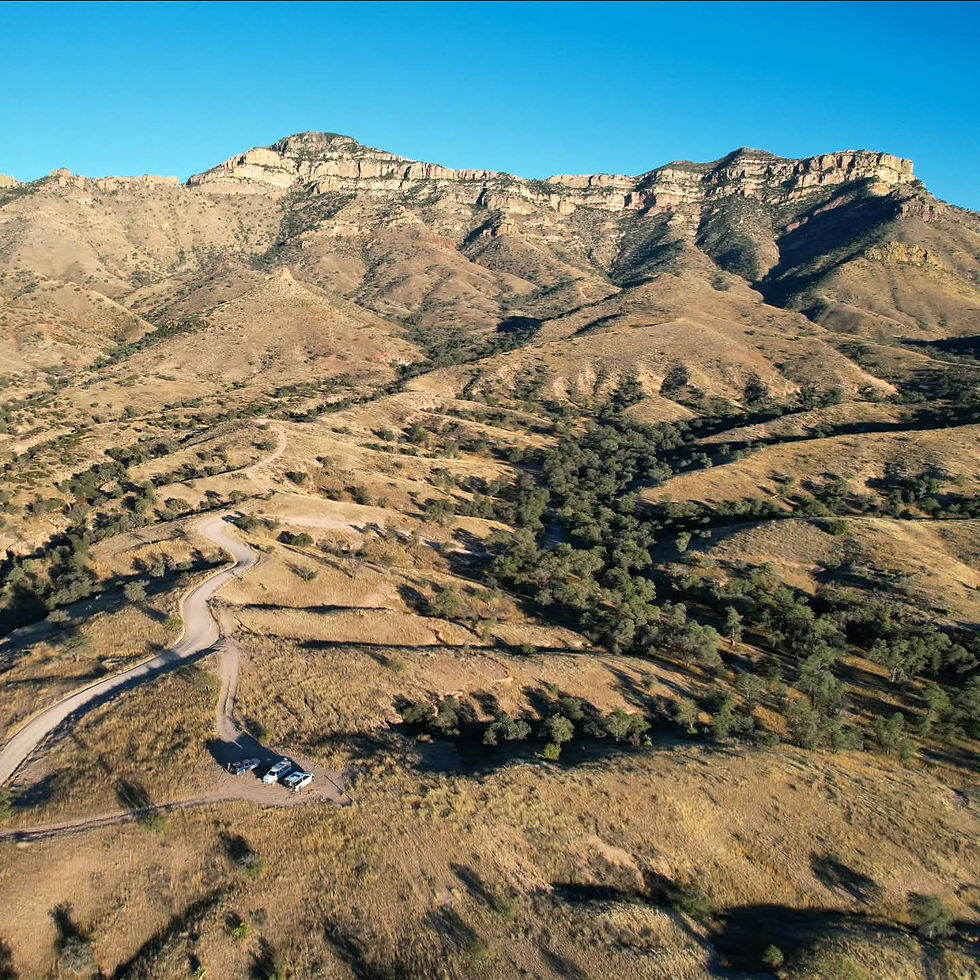
Days 4–5 took us along the border through the beautiful Parajita Wilderness. As the sun set, the landscape glowed in deep oranges and golds, and we found a hilltop campsite overlooking a cathedral of distant buttes. Border Patrol made occasional appearances—brief but reassuring—as we explored the remote terrain.
The next day we transitioned into the Buenos Aires National Wildlife Refuge, where the golden grasslands felt almost African. Rolling hills, vast plains, cottonwoods, mesquite groves, and marshy meadows created a landscape that felt entirely removed from Arizona. After hiking around the visitor center and learning about indigenous plants, we found a secluded campsite and built a roaring campfire beneath a sky overflowing with stars.
Morning brought a relaxed drive through some of the most remote terrain of the trip—expansive, rugged, and once again reminiscent of another country. Surrounded by countless varieties of cactus and desert wildlife, we eventually turned east toward the highway, concluding the 256‑mile journey of Segment 1. It was an incredible halfway point, and I couldn’t wait to see what Segment 2 would bring.
Segment 2: Montezuma Pass, Bisbee & Tombstone:
Segment 2 began about 20 miles south of where we’d left off. With more than 335 miles ahead, I wondered whether we’d be able to complete it—but we pressed on, climbing east across the Huachuca Mountains toward Montezuma Pass. At the summit (6,550 ft), we hiked an additional 400 feet to a viewpoint offering endless horizons.
From there we descended into Bisbee, stopping first at the massive Lavender Open Pit Mine—a terraced, multicolored copper mine nearly 300 acres wide and 950 feet deep. Bisbee itself felt like a quirky, time‑capsule town with a stubbornly preserved hippie vibe.
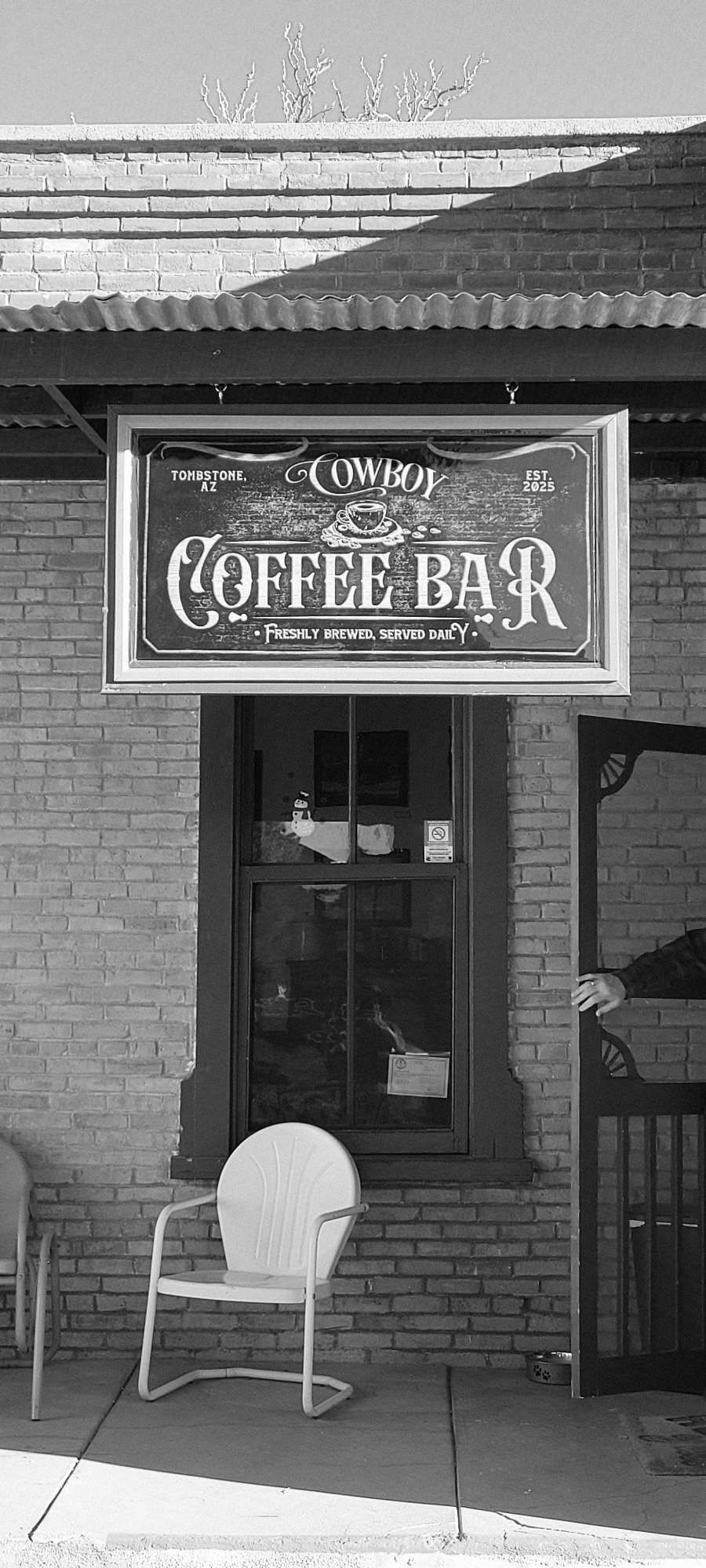
Next, we made a beeline for the legendary town of Tombstone. We camped within walking distance of the historic district and spent the next day playing tourist—visiting a century‑old cowboy coffee shop, grabbing a drink at a local brewery, and riding a trolley tour filled with stories from the town’s storied past. We even snagged some delicious sarsaparilla for the road. Tombstone is the kind of place you could spend days exploring, meeting locals, and soaking in the history.
Dragoon Mountains, Camp Rucker & the Chihuahua Desert:
By mid‑day we moved on, passing the granite spires of the Dragoon Mountains—once a stronghold of the Chiricahua Apache under Cochise and Geronimo. We rolled through ghost towns and tiny rural communities like Courtland and Elfrida before heading back into the mountains.
Nestled between the Pedregosa and Chiricahua ranges lies Camp Rucker, a historic military site named for Lieutenant John A. Rucker, who drowned while saving a fellow soldier. The preserved buildings and grounds offered a fascinating glimpse into frontier history. After a self‑guided tour, we found a quiet campsite for the night.
The next morning we headed south to Douglas for a much‑needed hot shower at the aquatic center, then followed Geronimo Trail along the border past the San Bernardino Volcanic Field. After lunch, we turned north into the Chihuahua Desert, passing through the town of Portal and into a spectacular valley framed by towering mountains. As the elevation climbed, we found a perfect campsite tucked among the pines.
Chiricahua National Monument & Journey’s End:
The following day we continued over a 7,000‑foot mountain pass to hike the stunning landscapes of Chiricahua National Monument. We wrapped up the trip with a 5‑mile round‑trip hike—one final immersion in the beauty of the Southwest—before parting ways and heading back toward Colorado.
This journey was more than a route on a map—it was a reminder of why we chase the horizon in the first place. The unexpected challenges, the quiet camps beneath a canopy of stars, the history etched into old Western towns, and the friendships strengthened mile after mile… all of it came together to close out the year with purpose.
Out there in the vastness of the Southwest, you’re reminded that adventure doesn’t wait for perfect conditions. It rewards those who show up, adapt, and keep moving forward.
Here’s to the roads that test us, the landscapes that humble us, and the journeys that change us.
Thank you to everyone this year for choosing to join along in the RMO adventures.
Onward to the next horizon!
-Justin






Fantastic! What an adventure!
I love your write up and pictures. It sounds like an amazing trip.